
Experts laud the decision to impose a 0.4 per cent Merchant Discount Rate (MDR) on UPI transactions exceeding Rs 2,000, effective October 15. This move, along with a dedicated fund for small merchants, is seen as crucial for creating a sustainable digital payments ecosystem, incentivising expansion in rural areas, and funding innovation while keeping most transactions free for users.
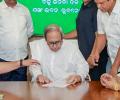
BJD chief Naveen Patnaik has voiced concerns over the Centre's decision to introduce Merchant Discount Rate (MDR) charges on UPI transactions above Rs 2,000 from October 15, urging protection for small traders and common people. This move has sparked a political debate, with the BJP defending the charges as beneficial for digital infrastructure and largely not impacting consumers, while the Congress and traders' associations criticise it as an additional burden.

The Retailers Association of India (RAI) has voiced concerns that the government's new 0.4 per cent Merchant Discount Rate (MDR) on UPI transactions above Rs 2,000 could reverse the progress of digital payment adoption among small retailers. This fee, effective October 15, places the burden on merchants operating on thin margins, potentially pushing them back to cash transactions and undermining the government's formalisation agenda, especially ahead of the festive season.

Mike McCabe, COO and Deputy CEO of the Esports Foundation, believes India has "more potential than any country on the planet" for esports, citing its enormous fan base, improving competitive ecosystem, and evolving policy environment as key drivers for rapid acceleration in the sport.

Former India cricket captain Virat Kohli met Maharashtra Deputy Chief Minister Eknath Shinde in London to discuss enhancing sports infrastructure, athlete development, and the state's progress. The dialogue focused on policy improvements, upcoming sports facilities like a Sports City near Navi Mumbai, and empowering youth through sports initiatives. Kohli also shared his passion for cricket and commitment to guiding young athletes.

CPI(ML) Liberation general secretary Dipankar Bhattacharya has strongly criticised the newly introduced Merchant Discount Rate (MDR) on select UPI transactions, labelling it a "UPI tax" and demanding its immediate rollback. He drew parallels with demonetisation, arguing that the new framework would negatively impact small shopkeepers, MSMEs, and ordinary citizens by increasing prices.

The BCCI has clarified that the Indian women's cricket team's decision not to accept the Asia Cup trophy from Asian Cricket Council's Pakistani chief Mohsin Naqvi was a "conscious, institutional" call, made due to prevailing circumstances and national sentiments.

Congress leader Rahul Gandhi has accused the Modi government of quietly paving the way for imposing fees on UPI transactions, alleging it's a surrender to American pressure. The government's recent notification exempts charges only up to Rs 2,000, sparking concerns that higher value transactions and eventually all UPI payments could incur fees. Finance Minister Nirmala Sitharaman, however, clarified that Merchant Discount Rate (MDR) applies to merchants, not customers, and supports digital infrastructure.

Despite near gender parity in basic bank account ownership, women in India remain significantly underrepresented in the growing platform economy due to gaps in digital financial capability and access to credit, according to a joint report by the International Labour Organization and National Council of Applied Economic Research.

Japan is deepening its defence relationship with India while simultaneously expanding its economic, infrastructure and security engagement with countries around India -- particularly Bangladesh. The result is an emerging Japanese conception of South Asia in which India remains the strategic anchor, but the geography surrounding India is becoming increasingly important, points out Varun Arya.

The government is introducing a 0.4% Merchant Discount Rate (MDR) on UPI person-to-merchant payments above Rs 2,000, effective October 15. This move ends the zero-MDR regime, aiming to fund UPI infrastructure and sustainability, as the previous government subsidy was insufficient to cover operational costs. Payments between individuals and most everyday merchant transactions will remain free.

RBI Governor Sanjay Malhotra stated that the central bank consistently views fintechs as 'valuable partners' in shaping India's future financial system, crediting the sector with expanding financial inclusion, enhancing customer experience, and streamlining credit delivery, particularly for MSMEs.

India's foreign exchange reserves increased by $9.9 billion to $716.9 billion for the week ended August 14, as reported by the Reserve Bank of India (RBI). This surge follows a previous jump of $14.14 billion in the week prior, indicating a robust recovery after a period of decline earlier this year.

The National Payments Corporation of India (NPCI) stated that the Merchant Discount Rate (MDR) "is distributed only amongst the UPI ecosystem, to further invest into infrastructure resilience, innovation, cybersecurity (protecting the UPI infrastructure with banks and non-banks) and customer service."

The question for the next 20 years is not whether India can become a $5 trillion or $10 trillion economy. Those are attractive targets, but the real question is whether India can create enough productive jobs, educate its children properly, make its cities liveable, and give hundreds of millions of people a substantially better life, asserts Ramesh Menon.

'My suggestion to Nandan Nilekani is that it would be worthwhile for him to take a holistic review in a manner in which examination is just one critical component.'

Russian President Vladimir Putin has arrived in India for a three-day visit to attend the BRICS summit and hold bilateral talks with Prime Minister Narendra Modi, focusing on expanding trade, investment, and energy cooperation amidst global geopolitical challenges.

In recent years, China and Russia have pushed for de-dollarisation within BRICS, which India has resisted. One reason is that India does not want to hurt its relationship with the United States, and another is the fear of China controlling trade because the renminbi is considered the strongest currency in the bloc today.

Analysts predict that the Indian stock market's sentiment this week will be primarily influenced by the domestic GDP data announcement, crude oil prices, and the crucial US non-farm payrolls report.

Southern chief ministers fear population stabilisation could reduce their parliamentary representation and tax devolution benefits.

'Major unions should be included. If this goes on, decision-making will become heavily one-sided and we will be forced to continue our strikes.'

Prime Minister Narendra Modi lauded India's 7.8 per cent GDP growth, achieved despite global conflicts and instability. He emphasised the importance of Swadeshi and self-reliance for a developed India by its 100th year of Independence, urging citizens to avoid unnecessary foreign expenditures.

Foreign Portfolio Investors (FPIs) withdrew Rs 13,138 crore from Indian equities in the first half of September, driven by heightened global uncertainty, rising crude oil prices, firm US bond yields, and a strong dollar, impacting risk appetite.

Indian benchmark indices, Sensex and Nifty, traded flat in early deals due to elevated crude oil prices exceeding USD 100 per barrel and persistent geopolitical tensions, which subdued investor risk appetite.

One in 10 employees at California-headquartered technology unicorns now work from India, surpassing other major US tech hubs and several countries, driven by US visa restrictions and substantial cost savings.
India's UPI system continues its rapid growth, dominating retail payments. Recent amendments to the Payment and Settlement Systems Act allow for targeted Merchant Discount Rates (MDR) on high-value merchant transactions, aiming to create a self-sustaining revenue model for the ecosystem while keeping P2P and low-value payments free. This move could generate significant revenue and encourage ecosystem participation.

The Centre on Monday informed the Supreme Court that the Central Board of Secondary Examination has come up with a new policy for the evaluation of private students, who were affected by the cancellation of Class XII board examination in Gulf countries due to the recent Iran-US war.

Experts highlight India's significant market potential for assistive technologies, estimated at Rs 75,000-95,000 crore by 2030. They advocate for a National Assistive Technology Policy to address current gaps in access and service delivery, fostering inclusion, independence, and economic participation for persons with disabilities and the elderly.

External Affairs Minister S Jaishankar raised India's concerns with US Secretary of State Marco Rubio regarding changes to US visa and immigration policies, emphasising that legal mobility should not be negatively affected. Rubio acknowledged potential 'bumps' during the transition as the US aims to improve its immigration system.

The Congress party has accused the Modi government of succumbing to US pressure by introducing a 0.4% Merchant Discount Rate (MDR) on UPI transactions over Rs 2,000 for merchants. The party alleges this move aims to benefit US card companies and links it to broader US actions against India, including tariffs and H-1B visa issues. The government, however, clarifies that consumers will not be charged.

Opposition parties, including Congress, TMC, and RJD, have strongly criticised the government's decision to impose a 0.4% Merchant Discount Rate (MDR) on UPI transactions exceeding Rs 2,000 made to merchants. They allege the move is a result of "American imperialism" and will lead to increased commodity prices, while the government maintains the charge is on merchants and not consumers, with person-to-person transactions remaining free.

The Indian government has introduced a 0.4% fee on UPI transactions above Rs 2,000 for merchants, effective October 15, sparking strong opposition from political parties and traders. Despite accusations of foreign influence and demands for a rollback, the finance ministry and top functionaries have stated there will be no reversal, citing the need for a self-sustaining digital payments ecosystem.

BMW India CFO Carsten Lammers has expressed surprise at the extensive scale and prolonged duration of tax and Customs litigation in India, advocating for faster dispute resolution and simpler procedures to ensure business stability.

Senior executives from Meta, the parent company of Facebook, Instagram, and WhatsApp, appeared before India's child rights body, NCPCR, for questioning regarding alleged advertisements promoting child sexual exploitative and abuse material (CSEAM) on its platforms. This follows a BBC report and a stern notice from the Ministry of Electronics and Information Technology (MeitY) to Meta over the issue.

India's position appears to be anchored around three red lines: Hasina's safety and the guarantee of a fair trial; assurances that Bangladeshi territory will not be used for activities hostile to India; and the restoration of an inclusive democratic process in Bangladesh.

Maharashtra Navnirman Sena (MNS) chief Raj Thackeray has voiced strong concerns about the divisive role of social media in society, alleging it fuels anger and religious disputes. He also criticised the unbridled use of high-decibel sound systems, questioned the government's economic policies despite GDP growth claims, and objected to political messaging in public offices. Thackeray further addressed linguistic politics and endorsed the "Inquilab Zindabad" slogan.
The opposition has intensified its criticism of the government's decision to impose a 0.4 per cent Merchant Discount Rate (MDR) on UPI transactions above Rs 2,000, effective October 15. Leaders like Rahul Gandhi and Jairam Ramesh allege the move is a result of US pressure, particularly from American card companies, and demand an immediate rollback, warning of increased costs for consumers.

'He didn't touch upon the core questions raised by the nine employee associations.'

The US push for clearer crypto rules is putting pressure on India to fill its own regulatory gap for virtual digital assets.
Indian benchmark indices, Sensex and Nifty, closed marginally lower due to elevated crude oil prices, fresh US-Iran tensions, and expectations of a tighter monetary policy from the US Federal Reserve, despite strong domestic GDP growth.
